
Central Laboratory Support in Singapore plays an important role in maintaining sample integrity and data quality across early- and mid-phase clinical research. Singapore is an emerging hub for clinical research, benefiting from clear regulations and strong research networks. Its infrastructure supports multi-country studies, but data integrity challenges can arise after sample collection, as tracking and storage issues can quickly escalate in regional trials.
This post examines common failure points in sample management for Singapore-based and Asia-Pacific studies. It describes the effective strategies employed by a well-run central laboratory support model to address these issues.
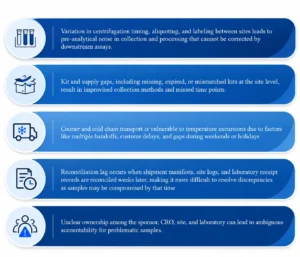
Most deviations related to samples are minor, recurring issues that build up over time across different sites and visits.
Figure 1: Deviations related to samples across sites
Central Laboratory Support in Singapore: Key Considerations
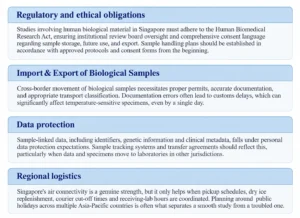
Singapore’s environment brings both advantages and requirements that sample management plans need to address deliberately.
Figure 2: Specific consideration—Singapore
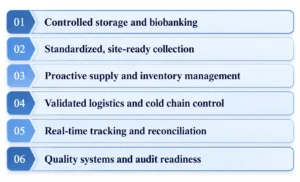
What Effective Central Laboratory Support in Singapore Looks Like
Figure 3: Central Laboratory Support by CurexBio
- Standardized collection methods using clear manuals and visit-specific kits effectively reduce variability. Well-designed kits, featuring pre-labels and processing instructions, minimize transcription errors and missed aliquots. Additionally, refresher training during staff turnover helps maintain protocol adherence.
- Proactive supply and inventory management involves kit forecasting aligned with enrollment projections, along with expiry tracking and buffer stock, to avoid last-minute scrambles for collection. Adjustments in supply should occur automatically in response to changes in enrollment, rather than relying on ad hoc requests.
- Validated logistics and cold chain control are essential, requiring pre-qualification of shipping lanes and validation of packaging for potential delays. Effective temperature monitoring must provide actionable data for timely intervention to prevent sample loss, and contingency routes for customs delays and missed connections should be established before patient enrollment.
- Real-time tracking and reconciliation provide a unified view of sample status from collection to analysis, which helps quickly identify issues. Reconciling manifests against laboratory receipt within one to two days allows teams to recover samples, accurately document deviations, and adjust site practices while the study is ongoing.
- Controlled storage and biobanking ensure sample integrity through temperature mapping, access controls, backup power, and defined retention and destruction procedures. When consent permits future research retention, inventory systems must clearly indicate consent status for potential users.
- Laboratories involved in regulated trials must adhere to quality frameworks and be ready for sponsor audits and regulatory inspections. Key evidence includes documented handling of deviations, corrective and preventive actions, and consistent training records, which demonstrate effective sample management to inspectors.
Effective Central Laboratory Support in Singapore relies on measurable sample management performance. Useful indicators include:
- Percentage of samples received within stability window
- Rate of temperature excursions per shipment
- Rate of unusable or rejected samples, by site and by cause
- Time from receipt to result reporting
- Time to resolve manifest discrepancies
- Kit-related deviations per site
Regular reviews with sites and sponsors convert recurring issues into specific solutions, such as retraining sites, adjusting shipping schedules, or redesigning kits.
CurexBio supports sponsors and study teams with Central Laboratory Support in Singapore and beyond, focusing on key sample management processes where studies typically experience delays and compromised data quality.
- Reviewing and aligning laboratory manuals, kit specifications, and sample handling plans with protocol requirements
- Coordinating sample logistics planning, including shipment documentation and contingency routing
- Supporting tracking and reconciliation processes so discrepancies surface early
- Helping teams prepare clear, inspection-ready documentation of procedures, deviations, and corrective actions
- Facilitating communication between sponsors, sites, and laboratory partners so that ownership of each step is clear
The goal of clinical trials is to achieve fewer compromised samples, quicker issue resolution, and defensible data. In Singapore and the Asia-Pacific region, effective Central Laboratory Support is crucial for maintaining sample integrity, data quality, and clinical trial timelines. Early planning, continuous measurement, and clear ownership by sponsors significantly reduce the time spent on managing deviations.
Planning a study in Singapore or the region? Contact CurexBio to discuss how we can support your sample management strategy.


