
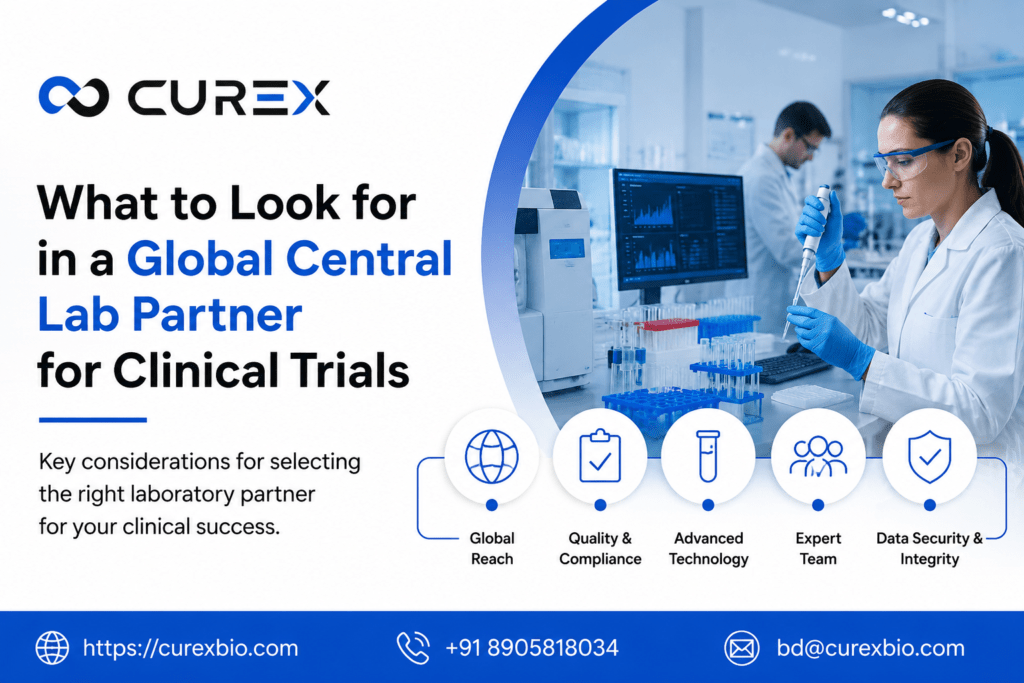
Clinical trials have become significantly more complex than they were even five years ago. Modern studies now span multiple countries, involve decentralized trial models, incorporate advanced biomarker testing, and generate enormous volumes of patient data. In this environment, selecting the right global central lab partner for clinical trials is no longer a routine operational decision. It has become a strategic choice that can directly influence study timelines, regulatory readiness, data quality, and overall trial success.
Imagine conducting a multinational Phase III oncology study involving hundreds of research sites spread across North America, Europe, and Asia. Every patient sample collected represents valuable clinical evidence. If samples are delayed, mishandled, or processed inconsistently, the entire study can face setbacks. This is why sponsors increasingly prioritize experienced central laboratory partners capable of managing global logistics, specialty testing, and integrated data reporting.
According to recent market research, the global clinical trial central laboratory services market is expected to reach nearly USD 7 billion by 2030, driven by precision medicine initiatives, growing R&D investments, and increased outsourcing of laboratory operations. These trends demonstrate that central laboratories are no longer simply testing facilities. They are becoming critical scientific and operational collaborators throughout the drug development lifecycle.
In this article, we explore the most important factors sponsors, CROs, and biotech companies should evaluate when selecting a global central lab partner.
Why Central Lab Selection Matters More Than Ever
Clinical research has entered an era where speed, accuracy, and global coordination determine competitive advantage. Sponsors face increasing pressure to accelerate development timelines while maintaining strict compliance with FDA, EMA, MHRA, PMDA, and ICH guidelines.
A central laboratory sits at the heart of this ecosystem. It serves as the primary hub for sample processing, biomarker analysis, safety testing, and data harmonization across multiple study sites. When laboratory operations function efficiently, trial teams gain faster access to critical insights. When laboratory operations fail, delays can ripple throughout the entire program.
The consequences of selecting an inadequate laboratory partner often extend beyond operational inconvenience. Delayed sample analysis can affect patient safety decisions. Inconsistent testing methodologies can compromise endpoint reliability. Weak logistics networks can result in sample degradation before analysis even begins.
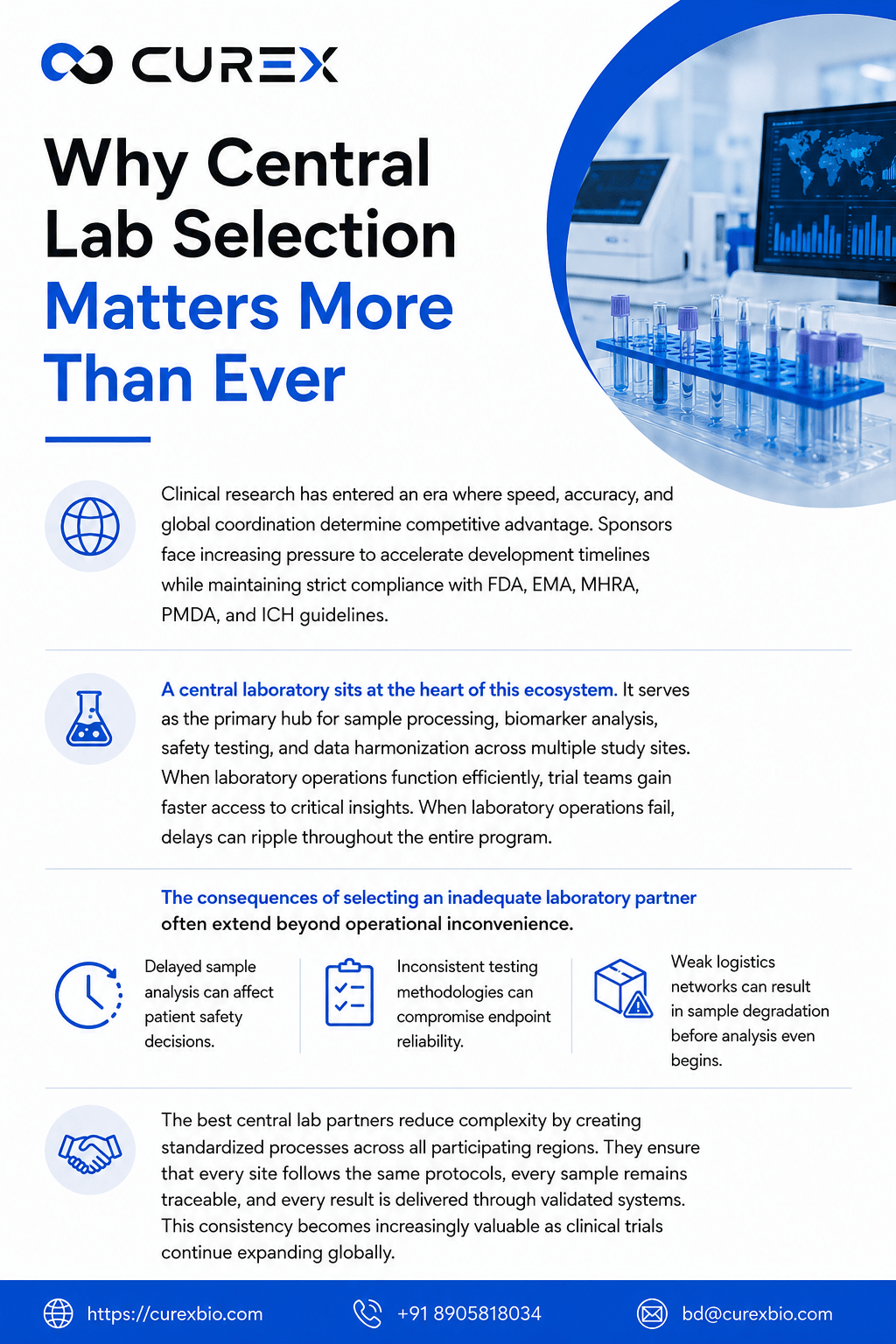
The best central lab partners reduce complexity by creating standardized processes across all participating regions. They ensure that every site follows the same protocols, every sample remains traceable, and every result is delivered through validated systems. This consistency becomes increasingly valuable as clinical trials continue expanding globally.
Global Logistics and Sample Management Capabilities
One of the first areas sponsors should evaluate is the laboratory’s ability to manage global clinical trial logistics.
Think of clinical samples as highly sensitive packages carrying irreplaceable scientific information. Every shipment must travel through a carefully controlled chain of custody. Temperature excursions, customs delays, transportation disruptions, and handling errors can compromise sample integrity and potentially invalidate valuable patient data.
An effective clinical trial central lab partner should offer comprehensive logistics capabilities that include:
- Temperature-controlled transportation
- Global courier partnerships
- Real-time shipment visibility
- Regional depots and laboratories
- Customized collection kits
- Biorepository management
- Contingency planning for disruptions
As decentralized clinical trials become more common, logistics complexity increases further. Patients may provide samples from local clinics, pharmacies, mobile healthcare providers, or even home-based collection settings. Central laboratories must accommodate these evolving collection models without sacrificing quality standards.
Organizations that demonstrate strong logistics infrastructure often become long-term strategic partners because they help eliminate one of the largest operational risks in global clinical development.
Advanced Biomarker and Specialty Testing Expertise
Traditional safety testing remains important, but modern drug development increasingly depends on advanced scientific capabilities.
Today’s precision medicine programs frequently require genomic profiling, molecular diagnostics, immunophenotyping, and companion diagnostic development. Oncology studies, rare disease research, cell therapies, and gene therapy programs all demand specialized laboratory expertise beyond standard chemistry and hematology testing.
A strong central laboratory partner should provide:
| Specialty Service | Strategic Value |
| Genomic Sequencing | Patient stratification |
| Flow Cytometry | Immune response analysis |
| Biomarker Testing | Treatment effectiveness |
| PK/PD Analysis | Drug response evaluation |
| Immunoassays | Biological activity monitoring |
| Molecular Diagnostics | Precision medicine support |
| Tissue Analysis | Oncology endpoint assessment |
Recent industry reports show biomarker testing remains one of the fastest-growing segments within central laboratory services due to expanding personalized medicine initiatives. Sponsors increasingly seek laboratory partners capable of integrating both routine and advanced testing under a single operational framework.
The ideal partner should not merely process samples but also contribute scientific expertise that strengthens study outcomes.
Technology Infrastructure and Data Integration
Clinical trials generate extraordinary amounts of information. Laboratory data, patient records, safety reports, imaging results, and biomarker outputs must work together seamlessly.
Without proper integration, data becomes fragmented. Teams waste time reconciling discrepancies instead of making informed decisions.
Leading global central laboratories invest heavily in:
- Laboratory Information Management Systems (LIMS)
- Electronic Data Capture (EDC) integration
- Real-time dashboards
- Automated reporting platforms
- Data reconciliation systems
- AI-driven analytics tools
- Secure cloud-based portals
According to market analyses, data management and reporting represent one of the fastest-growing areas within central laboratory services due to increasing trial complexity and demand for real-time oversight.
Sponsors should carefully evaluate how laboratory data integrates with their broader clinical technology ecosystem. A central lab that offers seamless interoperability can significantly reduce administrative burden and accelerate decision-making throughout the study lifecycle.
Regulatory Compliance and Global Quality Standards
Regulatory agencies continue raising expectations for laboratory oversight and inspection readiness.
Every laboratory partner should demonstrate robust compliance with:
- GCLP standards
- GLP requirements
- CAP accreditation
- CLIA certification
- ISO quality standards
- ICH guidelines
- FDA inspection readiness
Regulatory compliance extends far beyond maintaining certifications. Sponsors should examine quality management systems, deviation handling procedures, CAPA frameworks, audit histories, and staff training programs.
Would you trust critical regulatory data to an organization that struggles with documentation consistency? Most sponsors would not.
Strong quality systems create confidence that laboratory processes remain standardized regardless of study size, geography, or complexity. This consistency becomes especially important for multinational submissions where regulators scrutinize data integrity across every participating region.
Geographic Coverage and Local Expertise
A truly global central laboratory network requires more than simply maintaining facilities in multiple countries.
Successful multinational trials demand regional expertise capable of navigating local regulations, customs requirements, language barriers, and healthcare infrastructure differences.
Sponsors should evaluate:
- Laboratory locations
- Regional testing capabilities
- Local regulatory expertise
- Customs clearance support
- Regional project management teams
- Local language support
- Time-zone coverage
Clinical trials increasingly expand into Asia-Pacific, Latin America, Eastern Europe, and the Middle East. These regions offer significant patient recruitment opportunities but often introduce additional logistical and regulatory complexities.
An experienced global laboratory partner bridges these gaps while maintaining consistency across all participating sites.
Flexibility and Scalability for Modern Trial Designs
Clinical trials rarely remain static. Protocol amendments, enrollment fluctuations, new biomarkers, and changing endpoints frequently emerge during study execution.
A laboratory partner must adapt quickly without disrupting operations.
Indicators of flexibility include:
- Rapid kit modifications
- Scalable testing capacity
- Dedicated project management
- Fast protocol implementation
- Agile reporting structures
- Direct scientific consultation
Think of clinical development like navigating a constantly changing highway. The destination remains the same, but construction zones, detours, and weather conditions continually alter the route. Flexible laboratory partners help sponsors navigate these challenges without losing momentum.
As adaptive trial designs become increasingly common, responsiveness has become a major competitive differentiator among global laboratory providers.
Support for Precision Medicine and Future Clinical Models
The future of clinical research is undeniably personalized.
Precision medicine programs rely heavily on biomarker identification, patient stratification, and molecular diagnostics. Central laboratories increasingly function as scientific collaborators supporting these advanced therapeutic strategies.
Sponsors should assess capabilities related to:
- Companion diagnostics
- Multi-omics analysis
- Translational research
- Genomic profiling
- Cell and gene therapy testing
- Longitudinal biomarker monitoring
Industry forecasts indicate continued growth in genomic and molecular testing services as personalized medicine becomes more deeply integrated into drug development.
Laboratories capable of supporting these future-focused models provide sponsors with long-term strategic value beyond individual studies.
Why Integrated Service Providers Create Greater Efficiency
Managing multiple vendors often introduces unnecessary complexity.
Separate providers for laboratory testing, data management, biostatistics, regulatory affairs, and project oversight can create communication gaps and operational inefficiencies.
Integrated service providers help streamline study execution through coordinated workflows and centralized accountability.
At CurexBio, our integrated capabilities include:
- Clinical Development
- Data Management
- Bio-Statistics
- Regulatory Affairs
- Quality & Compliance
- Project Management
- Scientific Affairs
This collaborative model helps sponsors reduce vendor fragmentation while improving operational visibility across the clinical development lifecycle.
Whether supporting early-phase studies or multinational registration programs, integrated solutions often deliver greater consistency, efficiency, and regulatory readiness.
Conclusion
Selecting a global central lab partner for clinical trials is one of the most important decisions sponsors make during study planning. The right laboratory partner contributes far more than sample testing. It supports logistics coordination, biomarker innovation, regulatory compliance, data integration, and scientific collaboration across every phase of development.
As clinical trials become increasingly global, decentralized, and biomarker-driven, sponsors require partners capable of managing growing operational complexity while maintaining the highest quality standards. Organizations that invest in strong laboratory partnerships often experience improved efficiency, better data integrity, and smoother regulatory submissions.
For companies seeking a strategic clinical research partner, CurexBio offers integrated support across central laboratory operations, clinical development, data management, biostatistics, regulatory affairs, and quality compliance services designed to accelerate successful clinical outcomes.


