
Decades of the traditional clinical trial model relied on patients visiting major academic centers, leading to logistical challenges and limited diversity in enrollment. However, the pandemic prompted a shift to decentralized clinical trials (DCTs), where trial activities occur in patients’ homes or local communities. By 2026, DCTs have transitioned from a temporary solution to a key strategy in drug development.
What Exactly Is a Decentralized Clinical Trial?
A DCT is a clinical trial employing digital health technologies, local healthcare providers, and direct-to-patient logistics for remote study procedures, characterized by varying levels of decentralization.
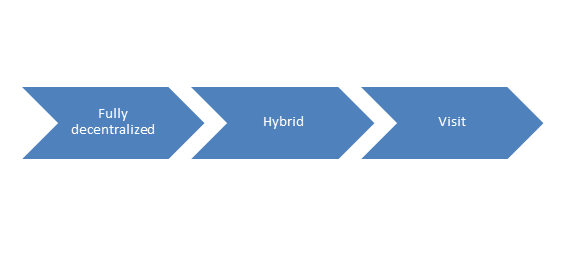
- Fully decentralized (virtual): Trial activities are conducted remotely, including e-consent for informed consent, home delivery of study drugs, telehealth assessments, and data collection through wearables and electronic patient-reported outcomes (ePRO).
- Hybrid (most common): Some procedures are conducted at traditional locations, such as complex imaging and biopsies, whereas others are decentralized, including routine blood draws at local labs and follow-up visits via video calls.
- Visit-light: A traditional site-based trial is characterized by minimized in-person visits while incorporating additional remote data collection methods.
By 2026, hybrid models will be the predominant method, providing optimal patient convenience alongside data integrity.
Why DCTs Are No Longer Optional?
The shift to DCTs is driven by compelling evidence, not just convenience.
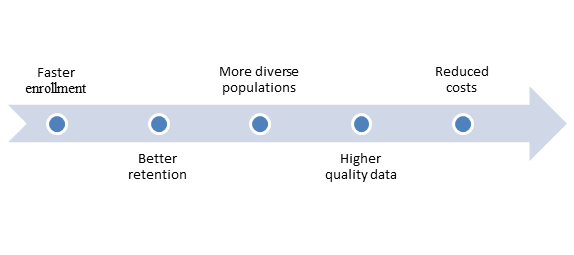
- Faster enrollment: Removing geographic barriers increases the patient pool, with a 2025 meta-analysis revealing that decentralized trials enrolled 25–40% faster than traditional site-based studies, especially beneficial for rare diseases and patients with mobility limitations.
- Better retention: Patient dropout negatively impacts clinical trials, but DCTs significantly enhance retention rates, often surpassing 90%, while traditional trials maintain rates of 70-80%. DCTs alleviate issues related to travel, work absence, and childcare.
- More diverse populations: Patient dropout negatively impacts clinical trials, but DCTs significantly enhance retention rates, often surpassing 90%, while traditional trials maintain rates of 70-80%. DCTs alleviate issues related to travel, work absence, and childcare.
- Higher quality data: Contrary to early concerns, DCTs can generate superior data by using wearables for continuous physiological measurements instead of episodic snapshots, utilizing electronic patient-reported outcomes (ePROs) to capture symptoms in real-time rather than depending on patient recall during site visits, and automating data transfers to eliminate transcription errors.
- Reduced costs: DCTs necessitate initial investments in technology and logistics but lead to savings in site monitoring, patient travel reimbursements, and facility overhead. Sponsors note a 15–25% reduction in per-patient costs for hybrid DCTs relative to traditional approaches.
Key Enabling Technologies for DCTs in 2026
Modern DCTs rely on an integrated technology stack:
- eConsent platforms facilitate remote informed consent using multimedia explanations and comprehension checks, ensuring full validation and acceptance by the FDA and EMA.
- Direct-to-patient (DTP) drug shipping involves the temperature-controlled delivery of investigational products directly to patients’ homes, ensuring mature integration with chain-of-custody tracking.
- Telehealth and video visits facilitate remote personnel interactions for assessments and safety checks, standardized and integrated with electronic data capture (EDC).
- Wearable devices enable continuous monitoring of vital signs, physical activity, sleep patterns, and glucose levels. They are becoming increasingly popular, with the emergence of device-agnostic platforms enhancing their usability.
- ePRO/eCOA applications enable patient-reported outcomes to be captured via smartphones. These apps are designed to be user-friendly, including voice-activated features for elderly and low-literacy patients.
- Mobile phlebotomy and home health services offer local blood draws, vital signs monitoring, ECGs, and specimen collection. Their network coverage is expanding, facilitating integration with central laboratories.
- Local lab networks enable routine safety labs to be performed near a patient’s home, coordinated through central lab portals.
- Virtual site monitoring involves the remote verification of source data and effective site management, aligning with the FDA’s RRA framework to ensure compliance and efficiency in regulatory oversight.
Regulatory Acceptance:
Regulators have not only accepted DCTs—they are actively encouraging them.
- The FDA’s guidance for 2023–2025 on decentralized trials includes standards on informed consent, investigational product shipping, and remote monitoring. DCT elements are now viewed as standard practice rather than exceptions needing special permission.
- EMA has incorporated DCT principles into its Good Clinical Practice framework, focusing on patient-centricity and emphasizing risk-based oversight.
- ICH E6(R3) revises ICH GCP guidelines to include decentralized elements and digital health technologies, promoting global harmonization for DCT conduct.
- Remote Regulatory Assessments (RRAs) have been established as a permanent tool by the FDA, requiring CROs and sponsors to maintain readiness for remote inspections, which is in line with the infrastructure of Decentralized Clinical Trials (DCT).
Real Challenges (and Solutions) in DCT Implementation
- Challenge 1: Technology Access and Literacy
Not all patients, particularly the elderly, low-income, or rural individuals, are comfortable with digital tools or own smartphones, which can lead to exclusion. A proposed solution includes offering loaner devices, simplified interfaces such as voice-activated or large-button options, and setting up dedicated patient support hotlines. Additionally, hybrid models should be considered to retain in-person options for those who require them.
- Challenge 2: Data Integration and Standardization
Wearables, ePRO apps, local labs, and home health services yield diverse data formats, timestamps, and quality levels. A proposed solution is the implementation of unified data platforms featuring automated ingestion pipelines and real-time reconciliation, with leading CROs providing device-agnostic integration layers.
- Challenge 3: Regulatory Divergence Across Countries
Wearables, ePRO apps, local labs, and home health services yield diverse data formats, timestamps, and quality levels. A proposed solution is the implementation of unified data platforms featuring automated ingestion pipelines and real-time reconciliation, with leading CROs providing device-agnostic integration layers.
- Challenge 4: Investigator Oversight
Investigators can monitor safety and protocol adherence at home by implementing risk-based oversight frameworks, where low-risk activities like electronic patient-reported outcomes (ePRO) and wearables are automated, while high-risk assessments, including safety lab abnormalities and adverse events, prompt immediate outreach to the site.
- Challenge 5: Supply Chain Complexity
Investigators can monitor safety and protocol adherence at home by implementing risk-based oversight frameworks, where low-risk activities like electronic patient-reported outcomes (ePRO) and wearables are automated, while high-risk assessments, including safety lab abnormalities and adverse events, prompt immediate outreach to the site.
The Future of DCTs: Beyond 2026
Several trends will shape the next generation of decentralized trials:
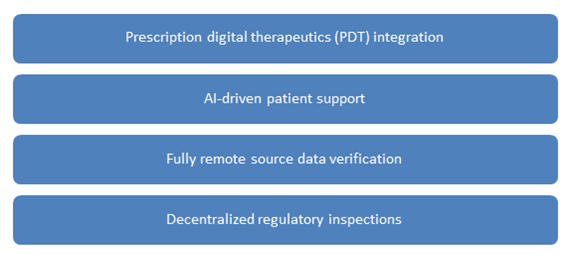
Prescription digital therapeutics (PDT) will increasingly assess software as a treatment through digital endpoints. AI-powered patient support will offer continuous guidance, medication reminders, and adverse event management. Advances in secure video documentation and blockchain may fully eliminate on-site monitoring needs. The FDA’s RRA program is set to transform, incorporating simulated inspections of decentralized clinical trial (DCT) technology, necessitating pre-inspection validation of remote systems.
Practical Advice for Sponsors Considering DCTs
If you are planning a DCT in 2026, follow these principles:
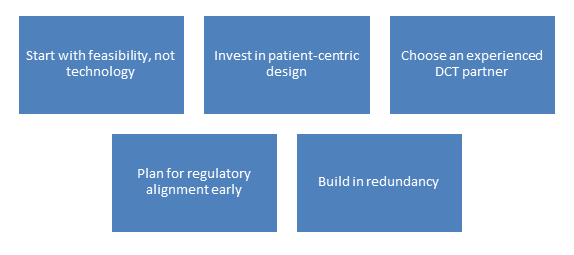
- Prioritize feasibility over technology, determining which trial activities can be decentralized safely.
- Focus on patient-centric design by collaborating with advocacy groups to address patient needs effectively.
- Select a DCT partner with expertise, robust technology, and a global home health network. Ensure early regulatory alignment by consulting with FDA and EMA on DCT components before finalizing protocols.
- Implement redundancy through contingency plans for potential technical and logistical issues.
CurexBio plans to provide comprehensive clinical trial management services, including site management, medical writing, and pharmacovigilance services to ensure patient safety.
Ready to explore how decentralized trials can accelerate your drug development program? Contact us on bd@curexbio.com to discuss a DCT strategy tailored to your asset, indication, and patient population.


