
The Future of Pharmacovigilance Services: Automation, AI, and Real-Time Monitoring
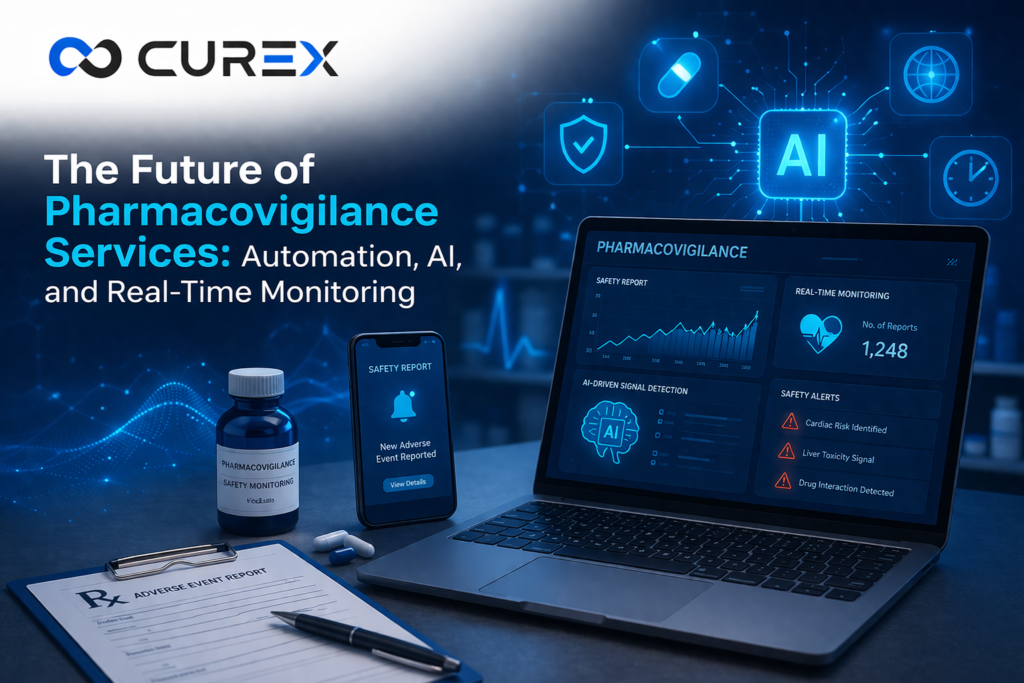
How Pharmacovigilance is Evolving into a Data-Driven Drug Safety Model Pharmacovigilance is experiencing a major transformation, transitioning by 2026 from a reactive compliance function to a proactive, data-driven approach for drug safety. This change is fueled by technological advances in AI, automation, and real-time monitoring, which are revolutionizing risk identification, assessment, and mitigation. The article discusses key trends shaping the future of pharmacovigilance and highlights how companies like CurexBio are offering innovative services to pharmaceutical sponsors globally. 2026: The Pivotal Year for Proactive Drug Safety Pharmacovigilance is experiencing a major transformation, transitioning by 2026 from a reactive compliance function to a proactive, data-driven approach for drug safety. This change is fueled by technological advances in AI, automation, and real-time monitoring, which are revolutionizing risk identification, assessment, and mitigation. The article discusses key trends shaping the future of pharmacovigilance and highlights how companies like CurexBio are offering innovative services to pharmaceutical sponsors globally. AI and Automation: Moving from Promise to Practice AI-Driven Case Processing AI applications in pharmacovigilance (PV) include automating case intake and processing, which involves duplicate detection, auto-coding adverse events to MedDRA terms, and extracting data from unstructured narratives. This automation minimizes manual effort in safety data triage, allowing experts to concentrate on higher-level analysis. Faster Signal Detection AI is transforming signal detection by emphasizing data quality, transparency, and real-world insights. Advanced analytics enable the identification of subtle signals, such as device malfunctions or medication errors, which could easily go unnoticed. The goal is to shift from reactive measures to a proactive, real-time monitoring system for drug safety. Human Augmented Approach Human oversight is essential for the successful integration of AI in pharmacovigilance. This process requires a combination of reliable technology and robust governance, with pharmacovigilance teams remaining central. AI serves as a powerful assistant, augmenting human expertise to improve patient safety. Real-Time Monitoring Regulatory agencies are actively enabling and driving the shift toward real-time safety monitoring. FDA’s AEMS Panel The FDA launched the Adverse Event Monitoring System (AEMS) in March 2026, replacing seven legacy databases and allowing near-real-time public access to adverse event data. This advancement facilitates faster hypothesis generation and earlier safety signal detection, significantly affecting manufacturers’ risk management plans and label change readiness. Global Regulatory Alignment This drive for real-time data is a global trend, with regulators such as the FDA and EMA taking action. In January 2026, they issued ten guiding principles for good AI practice throughout the medicines lifecycle, from early research to post-market safety monitoring. These principles offer a framework to enhance pharmacovigilance, promote innovation, and reduce time-to-market while upholding rigorous standards. The New Regulatory Mandate The shift to proactive, tech-enabled safety is backed by major regulatory initiatives in 2026: Real-World Evidence (RWE) offer safety scenario Real-World Evidence (RWE) is essential for comprehensive drug safety monitoring, utilizing data from electronic health records and registries to assess drug performance in diverse populations. In March 2026, the FDA recognized this importance by releasing draft guidance for using Real-World Data (RWD) in non-interventional safety studies. Addressing Implementation Challenges The integration of AI and automation presents challenges such as ensuring auditability, maintaining data quality, and managing risks in a regulated environment. Survey data indicates that processing automation (34%) and smarter signal detection (22%) are the main adoption drivers. Effective implementation necessitates a strong governance model that combines validated technology with expert oversight. CurexBio provides a comprehensive array of innovative pharmacovigilance services tailored for modern challenges, collaborating with pharmaceutical sponsors to manage drug safety, maintain compliance, and safeguard patients. Our future-ready PV services include: Proactive, AI-Enhanced Signal Detection: We monitor safety data to detect new or changing safety signals, assess their significance, and manage risks proactively. Advanced Safety Data Systems: Our services utilize advanced safety data systems to guarantee accuracy, reduce risk, and prioritize subject safety throughout all stages. Comprehensive End-to-End Support: We provide customized solutions from clinical trial protocol development to post-marketing surveillance, ensuring compliance with global regulations. The future of pharmacovigilance is proactive, automated, and driven by real-time data, leveraging AI and real-world evidence to enhance drug safety. We offers expertise, technology, and flexible services to enhance pharmacovigilance operations and ensure product safety in 2026 and beyond. Ready to elevate your drug safety strategy? Contact CurexBio today to discover how our cutting-edge pharmacovigilance services can help you stay ahead of the curve.
Beyond the Prescription: How Pharmacovigilance Safeguards Your Health
When you take a medication, you expect it to heal you—- not cause unexpected harm. But even the most rigorously tested drugs can have side effects that only appear once thousands or millions of people start using them. This is where pharmacovigilance (PV) steps in —- the quiet, constant guardian ensuring medicines remain safe long after they reach the market. At CUREX, we believe that an informed patient and a proactive healthcare provider form the best defense against drug-related harm. That’s why PV isn’t just part of our operations—- it’s at the heart of our mission. What exactly is Pharmacovigilance? Pharmacovigilance is the science and practice of detecting, assessing, understanding, and preventing adverse effects or any drug-related problems. Think of it as a safety net that operates continuously, ensuring that real-world experience with a drug is closely monitored and analyzed. PV involves: Figure 1: Pharmacovigilance in CUREX “One patient’s experience can lead to safety measures that protect millions.” Why Pharmacovigilance Matters More Than Ever Bridging the Clinical Trial Gap -Clinical trials involve a limited number of participants under controlled conditions. PV extends this by tracking safety in diverse, everyday populations — elderly patients, pregnant women, people with multiple health conditions — uncovering risks that might otherwise go unnoticed. Catching the Unpredictable -Some adverse effects occur in less than 1 in 10,000 patients, or appear years after treatment. PV enables the long-term, large-scale observation needed to detect these rare events. Ensuring Generic & Biosimilar Safety -While generics match branded drugs chemically, differences in manufacturing can impact safety or efficacy. PV ensures these alternatives meet the same high safety standards. Preventing Dangerous Drug Interactions -By analyzing prescription trends, PV systems can flag hazardous combinations — like blood thinners with certain painkillers — before they cause harm. The Evolution of PV: From Paper Reports to AI Insights Pharmacovigilance has transformed from a slow, manual process into a data-driven global safety network: Figure 2: Evolution of Pharmacovigilance At CUREX, we integrate anonymized, consent-based patient data into global PV databases, accelerating detection of potential risks and enabling faster safety interventions. How Patients and Providers Play a Role Pharmacovigilance thrives on community participation: Report Side Effects promptly : even if they seem minor. Small patterns can reveal big safety issues. Provide Complete Medical History: including allergies, other medications, and health conditions, to help analysts assess risks accurately. Myth: Only severe side effects are worth reporting. Truth: Mild or common side effects can be key to spotting trends and improving dosage recommendations. CUREX’s Commitment to Excellence in Pharmacovigilance We go beyond regulatory requirements, focusing on innovation and accessibility: Figure 3: CUREX Commitment to Pharmacovigilance The Bottom Line Pharmacovigilance is more than just a regulatory checkbox >>> it’s a dynamic shield protecting public health. By turning data into actionable safety measures, PV ensures that today’s medical breakthroughs don’t become tomorrow’s public health crises. At CUREX, we don’t just deliver treatments, we safeguard trust. Stay Vigilant. Stay Safe. Have a concern about your medication? Submit a report via our Safety Portal or speak directly with your CUREX care coordinator. read also: Exploring Clinical Trials: A Comprehensive Guide to Medical Innovation


