
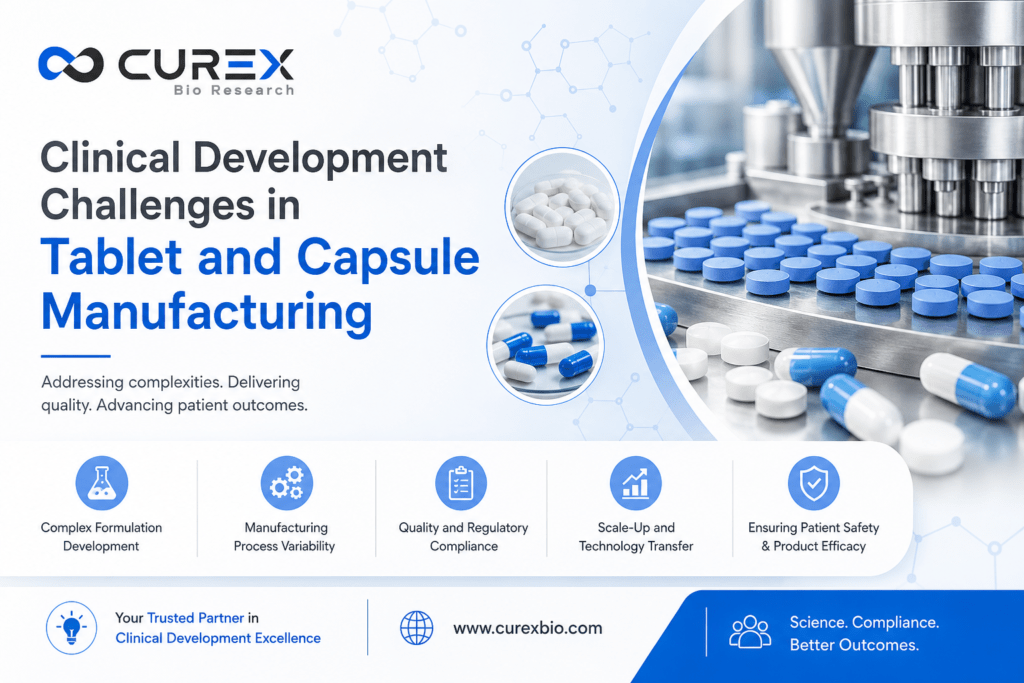
Tablets and capsules are the most commonly used oral solid dosage forms in pharmaceuticals, valued for their convenience, stability, and patient acceptance. However, the journey from formulation to clinical development is complex, as manufacturing variables can greatly affect bioavailability, consistency, and regulatory results. Early understanding of these challenges enables sponsors to create more robust clinical programs and minimize potential delays.
Table of Contents
ToggleFormulation Variability and Its Impact on Bioavailability
Minor changes in excipients, particle size, compression force, or coating can significantly affect dissolution and absorption in tablets and capsules, potentially resulting in failed bioequivalence studies or unexpected pharmacokinetic outcomes in early clinical trials. Consistent in vitro–in vivo correlation necessitates collaboration between formulation scientists and clinical teams.
Scale-Up and Process Consistency
Clinical trial materials are often produced on a smaller scale than commercial batches, leading to potential variability due to differences in equipment, mixing times, or granulation methods. It is crucial to ensure that the clinical batch process accurately reflects the future commercial process to yield reliable data for regulatory submissions.
Bioequivalence Study Design Complexities
Bioequivalence studies are crucial for the approval of generic tablets and capsules. Factors such as high intra-subject variability, food effects, and narrow therapeutic index compounds complicate these studies. Careful planning is needed in selecting study design, sample size, and analytical methods to prevent inconclusive or underpowered results.
Stability and Shelf-Life Considerations
Clinical supplies must maintain stability during trials, as moisture sensitivity and polymorphic changes can affect product quality and safety. Comprehensive stability data, both accelerated and real-time, is essential to validate the clinical shelf life and storage conditions.
Regulatory Expectations for CMC Documentation
Regulators demand clear connections between manufacturing processes, product quality, and clinical performance. Incomplete or inconsistent Chemistry, Manufacturing, and Controls (CMC) information, particularly regarding critical process parameters and control strategies, may raise questions that delay clinical trial applications or marketing submissions.
Supply Chain and Manufacturing Site Challenges
Changes in manufacturing sites, contract organizations, or API suppliers can lead to variability. It is essential to maintain GMP compliance, ensure data integrity, and properly document technology transfer when producing clinical batches under varying conditions.
Bridging Studies and Formulation Changes
Changes in formulation or manufacturing during development may necessitate bridging studies or bioequivalence work, potentially resetting timelines and increasing costs if not managed properly.
Moving Forward with Greater Certainty
CurexBio provides specialized clinical development and regulatory support for oral solid dosage forms, particularly tablets and capsules. Our services include strategy and protocol design for bioequivalence studies, medical writing for protocols and clinical reports, regulatory affairs guidance, quality oversight, and support that connects formulation, manufacturing, and clinical performance. This combination of clinical research expertise and manufacturing knowledge helps companies generate reliable data and strengthen their regulatory submissions.
Successful clinical development of tablets and capsules requires proactive management of manufacturing risks and early collaboration among formulation, manufacturing, and clinical teams to minimize failures and regulatory issues. CurexBio offers support for clinical strategy, bioequivalence studies, and regulatory documentation for organizations developing or optimizing these products.
Contact us at bd@curexbio.com to discuss how we can support your oral solid dosage clinical development program.


