
Accelerating Drug Approvals: The Power of Smarter Clinical Development

The transition from a promising molecule in a laboratory setting to an effective medication available for patient use is characterized by a lengthy, intricate, and expensive process known as Clinical Development. This phase is crucial as it merges scientific innovation with practical human testing. Biopharmaceutical companies face significant pressure to expedite the availability of novel therapies while ensuring that safety and efficacy remain uncompromised. Traditionally, the clinical development process has followed a linear and sequential model, which often results in prolonged timelines and escalating costs. However, there is a compelling need to explore smarter methodologies that can streamline and accelerate the clinical development pathway. The future of medicine hinges on our capacity to rethink and improve these processes. Clinical development comprises the rigorous Phases I-IV trials designed to answer essential questions: Is the drug safe? (Phase I) Does it work? (Phase II) How does it compare to the standard of care? (Phase III) What are the long-term effects? (Phase IV) Each phase of the clinical trial process acts as a gatekeeper, where any misstep—such as the design of protocols, the pace of patient recruitment, or the management of data—can lead to significant delays measured in years and costs reaching millions of dollars. These delays have a profound impact, extending beyond financial loss, as they postpone the availability of new treatments for patients eagerly awaiting hope for their conditions. Route to Smarter Clinical Development Strategy Acceleration doesn’t mean cutting corners. It means building efficiency, agility, and intelligence into every step of the process. Here are the key strategies reshaping the landscape: Figure 1: CUREXBIO Clinical development Plan Strategic Protocol Design: A well-designed protocol serves as an essential blueprint for achieving success in clinical trials. The transition from generic, one-size-fits-all templates to adaptive trial designs is crucial, as it facilitates modifications based on interim data. This flexibility can include smoothly advancing through different phases of the trial or the early termination of ineffective study arms, which ultimately conserves both time and resources. Leveraging Real-World Evidence (RWE): Incorporating real-world evidence (RWE) from the beginning stages of clinical trials can significantly enhance the design of these trials. It allows for informed patient selection and can even bolster support for regulatory submissions. By gaining insights into the real-world patient journey, researchers are better equipped to create clinical trials that are not only more representative of the target population but also possess a greater likelihood of achieving successful outcomes. Advanced Patient Recruitment and Retention: The primary challenge in clinical development frequently lies in the difficulty of identifying suitable patients for trials. To mitigate this issue, employing predictive analytics, leveraging digital outreach strategies, and partnering with specialized patient advocacy organizations can significantly expedite the enrollment process. These approaches not only enhance the speed of patient recruitment but also ensure that the correct demographic is being studied in clinical research. Integrated Data and Technology Platforms: Siloed data is a major source of delay. A unified technology platform that integrates data from electronic health records (EHRs), clinical trial management systems (CTMS), and electronic data capture (EDC) systems provides a single source of truth. This enables real-time insights, faster decision-making, and streamlined reporting. CUREXBIO is transforming clinical development by creating more efficient pathways that minimize risks and expedite timelines. Recognizing the critical importance of speed, precision, and compliance in delivering cures, CUREXBIO offers a comprehensive suite of clinical development services grounded in strategic agility and extensive regulatory knowledge. We collaborates closely with partners to navigate the complexities of clinical trials effectively. Create End-to-End Strategy: We work backwards from your target product profile to create a lean, efficient, and globally-aware clinical development plan. Perform with Precision: Our team of experts manages all operational aspects, from site selection and regulatory submissions to vendor management and quality control, ensuring flawless execution. Appreciate Innovation: We are pioneers in integrating adaptive designs, digital endpoints, and advanced data analytics into our trials to generate robust evidence faster. Navigate the Regulatory Maze: Our deep experience with global health authorities (FDA, EMA, etc.) ensures your program is designed for regulatory success from day one. We believe that an innovative clinical development strategy serves as a critical catalyst for delivering new therapies to patients in need. This approach emphasizes not only the speed of clinical trials but also their overall quality and effectiveness. By prioritizing smarter development methods, we can enhance the success rate of drug trials, ultimately benefiting patient care. For those seeking to improve their drug development processes, CUREXBIO offers specialized Clinical Development services designed to accelerate timelines and optimize outcomes. Contact us today to learn more about how we can support your journey in drug development.
Beyond the Data: How Professional Medical Writing Services Accelerates Clinical Trial Success
Medical writing services have become essential in today’s clinical research landscape. In the high-stakes environment of clinical trials, ensuring the integrity of data is essential; however, the narrative surrounding this data is equally vital. The documents that synthesize intricate data into a coherent and compelling story for regulators, investors, and the scientific community have evolved from merely supportive components to critical strategic necessities. Professional medical writing plays a crucial role in this transformation. Clinical trial documentation serves as the foundational element of the drug development process, encompassing a range of documents from the initial protocol, which provides the study’s comprehensive framework, to the final clinical study report (CSR), which encapsulates the study’s findings. Each document within this process demands meticulous crafting to ensure accuracy and compliance, underscoring the importance of professional medical writing services in conveying vital information effectively. Ineffective writing can lead to a cascade of challenges: Figure 1: Challenges for Ineffective clinical document Regulatory Delays: Vague protocols, inconsistent data presentation, and poorly justified arguments in submissions to regulatory agencies such as the FDA or EMA can result in extended inquiries. These inquiries can ultimately lead to significant delays in the approval process, incurring additional costs for the involved entities. Protocol Amendments: A poorly written protocol in clinical trials can lead to significant ambiguities, which may necessitate numerous amendments during the trial process. These amendments can in turn inflate both the budgets and timelines associated with the trial, creating inefficiencies and possibly compromising the integrity of the research. Compromised Data Integrity: Inconsistencies between documents, such as divergences between the protocol and the statistical analysis plan, can significantly undermine the perceived reliability of the entire dataset. This raises critical concerns regarding the integrity of the research findings and may lead to skepticism among stakeholders about the validity and applicability of the results derived from the dataset. Inefficient Communication: A lack of clarity can impede communication among sponsors, CROs, and investigational sites, resulting in operational inefficiencies. How Professional Medical Writing Services Elevate Your Trial Partnering with expert medical writers transforms this potential liability into a powerful asset. Here’s how: Figure 2: Elevate your Medical writing by CUREXBIO ways Ensuring Regulatory Compliance from Day One Professional medical writers are knowledgeable about current ICH, FDA, EMA guidelines, and ensure that all documents, such as the Investigator’s Brochure and Common Technical Document modules, comply with strict regulatory standards to reduce rejections or significant revision requests. Crafting a Robust and Feasible Protocol The protocol serves as the trial’s foundation, with expert writers working alongside clinical and scientific teams to convert scientific concepts into clear operational plans. This approach minimizes amendments and facilitates smooth execution of the study across all sites. Enhancing Clarity, Consistency, and Credibility Medical writers excel in scientific storytelling, converting intricate statistical analyses and clinical outcomes into clear and concise narratives. This uniformity in documents, ranging from patient narratives to final Clinical Study Reports (CSRs), establishes a coherent and credible argument for a product’s safety and efficacy. Accelerating Timelines for Faster Time-to-Market Document preparation is conducted simultaneously with other trial activities by a specialized medical writing team, which expertly manages complex timelines and coordinates with biostatistics, clinical operations, and regulatory affairs. This approach prevents documentation from becoming a bottleneck, resulting in a quicker submission process that accelerates market access. Improving Stakeholder Communication Professional medical writers customize informed consent forms, investor summaries, and comprehensive reports to effectively disseminate knowledge tailored to their specific audiences. CUREXBIO offers professional medical writing services aimed at enhancing clinical documentation. Our position themselves as a strategic partner, emphasizing the importance of exceptional communication in the field of science. Our comprehensive suite of Medical Writing services includes: Clinical Trial Protocols Preparation and Amendments: Developing clear, comprehensive, and regulator-ready protocols. Clinical Study Reports (CSRs): Creating robust and compelling CSRs that effectively present your trial results. Investigator’s Brochures (IBs): Compiling and updating IBs to ensure site investigators have the most current safety and efficacy information. Regulatory Submission Documents: Authoring and compiling modules for eCTD submissions (e.g., Module 2 summaries). Patient-Friendly Summaries: Translating complex trial results into lay-language for patients and the public. Manuscripts and Publications: Developing high-quality manuscripts for peer-reviewed journals to amplify the impact of your research. CUREXBIO specializes in creating compelling evidence packages that lead to regulatory success and market acceptance. Our writers possess deep therapeutic expertise and a strong grasp of regulatory science, ensuring impactful documentation. We offer professional medical writing services aimed at enhancing clinical trial documentation, promoting a smoother and faster clinical development process. Visit our Website at www.curexbio.com or Schedule a Consultation at bd@curexbio.com
The Bioanalytical Services in Ensuring Drug Safety and Efficacy
In the process of bringing a drug from the laboratory to the patient, every stage undergoes thorough scrutiny, highlighting the critical role of Bioanalytical Services. While major breakthroughs in molecular discovery often receive considerable attention, the functions of bioanalytical services serve as a foundational discipline ensuring patient safety and drug efficacy. Bioanalytical services are essential for quantifying the presence of drugs, their metabolites, and biomarkers within biological samples. They answer key questions related to drug action, including “how much,” “how long,” and “what else” regarding drug interaction within the human body. This scientific measurement provides concrete evidence supporting whether a drug performs as intended. From the perspective of biotech and pharmaceutical companies, engaging a trustworthy provider of bioanalytical services transcends being a mere checkbox in the development process; it is a vital strategy for minimizing risks associated with drug development and validating a drug’s overall value. This reliance on accurate bioanalysis is pivotal in safeguarding both patient welfare and the scientific integrity of the pharmaceutical industry. What are Bioanalytical Services? Bioanalysis refers to the quantitative measurement of active pharmaceutical compounds, their metabolites, and biological molecules known as biomarkers within various physiological samples, including blood, plasma, urine, and tissues. This critical discipline employs advanced analytical technologies, key amongst them: • Liquid Chromatography-Mass Spectrometry (LC-MS/MS): This method is considered the gold standard for analyzing small molecule drugs due to its superior sensitivity and specificity. • Ligand Binding Assays (LBA): This category, which includes techniques like Enzyme-Linked Immunosorbent Assay (ELISA), is primarily utilized for the assessment of large molecule biologics, such as monoclonal antibodies. A thorough Bioanalytical Services offering typically includes essential services such as method development, validation, and the analysis of samples, which occur during every phase of both non-clinical and clinical trials. This comprehensive framework ensures reliability and accuracy in the monitoring and assessment of drug efficacy and safety throughout the research and development lifecycle. The Pillars of Safety and Efficacy: Key Roles of Bioanalysis It highlights the foundational importance of bioanalytical data in the drug development process. This data is essential for making informed decisions regarding the safety and efficacy of pharmaceutical products. The significance of bioanalysis can be categorized into three major areas, although the detailed explanation of these areas is not provided in the excerpt. Understanding these roles is crucial for stakeholders involved in drug development, as they directly relate to regulatory compliance and the overall success of therapeutic interventions. 1. Pharmacokinetics (PK): Understanding the Body’s Impact on the Drug PK analysis answers fundamental questions about what the body does to the drug. By measuring drug concentrations over time, bioanalytical data helps define: • Absorption: How quickly and completely is the drug absorbed? • Distribution: Where does the drug go in the body? • Metabolism: How is the drug broken down? • Excretion: How is the drug cleared from the body? This PK profile is crucial for determining the correct dosage and dosing regimen (e.g., once-daily vs. twice-daily) to maintain therapeutic levels without reaching toxic concentrations. 2. Pharmacodynamics (PD): Understanding the Drug’s Impact on the Body PD analysis measures the biochemical and physiological effects of a drug. This often involves quantifying biomarkers—biological indicators of a drug’s activity. By linking drug exposure (PK data) to the pharmacological response (PD data), scientists can: • Confirm the drug is hitting its intended target. • Establish a dose-response relationship, proving that higher doses lead to a greater therapeutic effect. • Provide early evidence of efficacy before waiting for long-term clinical endpoints. 3. Toxicology and Safety Assessment (TK) Before a drug is ever administered to humans, its safety is evaluated in animal studies. Toxicokinetics (TK), a branch of PK, measures drug exposure in these studies. This data is critical to: • Correlate the dose given to animals with the observed toxicity. • Establish a safety margin for selecting the starting dose for First-in-Human (FIH) clinical trials. • Identify potential toxic metabolites. In the realm of bioanalytical services, the significance of aligning with a specialized expert partner extends well beyond the utilization of sophisticated technology. To adeptly navigate the complexities of this sector, it is crucial to maintain strict compliance with global regulatory standards, including the bioanalytical method validation guidelines set forth by the FDA and EMA. Furthermore, ensuring impeccable data integrity is non-negotiable, as it underpins the credibility of analytical outcomes. Additionally, the capability to address intricate analytical challenges is essential for success in this demanding field. A trusted Bioanalytical Services partner provides: • Ensuring regulatory compliance: is paramount in the generation of data, as it must adhere to quality systems like Good Laboratory Practice (GLP), which are acceptable to health authorities. This adherence is crucial in preventing delays during the submission process, which can be both time-consuming and costly. • Problem-solving expertise: plays a significant role in this context, particularly in the development of innovative methods targeted at challenging molecules that may exhibit poor stability or exist in low concentrations. • Enhancing efficiency and speed: through optimized workflows is essential. Such improvements not only accelerate timelines but also facilitate the quicker delivery of vital data to sponsors, thereby enabling informed decision-making during the key stages of development. CUREXBIO: Your Trusted Partner for Definitive Bioanalytical Data CUREXBIO emphasizes the importance of its role in drug development, delivering essential bioanalytical data to confirm the safety and effectiveness of pharmaceuticals. Their Bioanalytical Services serve as an integral part of a client’s team, enhancing confidence and clarity in advancing projects. CUREXBIO offers comprehensive end-to-end capabilities that encompass: • Robust Method Development & Validation: for both small and large molecules. • High-throughput Sample Analysis: tailored for pre-clinical and clinical studies spanning Phases I through IV. • Specialized Assays: tailored for pharmacokinetics (PK), pharmacodynamics (PD), and immunogenicity testing. • Expert Regulatory Support: ensuring readiness of the data package for submission. In the intricate landscape of drug development, the bioanalytical data provided by CUREXBIO serves as a critical link between the drug molecule and patient needs, effectively converting hypotheses into substantiated evidence and potential therapies into clinical realities.
Understanding Biostatistics Services: The Foundation of Medical Innovation
Biostatistics plays a crucial role in the healthcare and life sciences sectors, and biostatistics services apply statistical principles to address various questions and problems related to medicine, public health, and biology. In an environment saturated with data—from clinical trial outcomes to public health surveys—biostatistics provides the essential tools needed to interpret this raw information. It transforms numerical data into meaningful insights, converting what may appear to be an unreadable map of information into reliable, actionable evidence. This scientific discipline is indispensable for researchers and practitioners aiming to make informed decisions based on the immense amount of biological data generated in the field. Biostatisticians in scientific research acts as detectives who meticulously design studies and gather data, which can be likened to collecting clues. They employ sophisticated statistical techniques to differentiate between significant findings (“signal”) and irrelevant information (“noise”). This analytical process enables them to address important questions in the medical and health fields, such as: Determining the efficacy of new drugs, Identifying risk factors associated with diseases, Evaluating the accuracy and reliability of diagnostic tests. Their work is essential for advancing our understanding of health-related issues and improving medical outcomes. Without biostatistics, modern evidence-based medicine would not exist. The Two Main Types of Biostatistics Biostatistical analysis is broadly divided into two categories: Descriptive Statistics: This is the first step in any data analysis. It summarizes and describes the main features of a dataset. Purpose: To provide a simple overview of the sample and measures. Methods: Mean, median, mode, standard deviation, graphs, and charts. Example: Calculating the average age, gender distribution, and baseline blood pressure of participants in a study. Inferential Statistics: This is where the real detective work begins. Inferential statistics allows us to make predictions or inferences about a larger population based on data from a smaller sample. Purpose: To draw conclusions that extend beyond the immediate data. Methods: Hypothesis testing, confidence intervals, regression analysis, p-values. Example: Using data from a 500-patient clinical trial to conclude that a new drug is effective for the entire target population. Role of Biostatistics: The role of biostatistics is integral to numerous domains within health and medicine, showcasing its extensive applicability. Clinical Trials: Biostatistics is crucial in the design of clinical trials, helping determine appropriate sample sizes while also analyzing efficacy and safety data necessary for regulatory approvals of new pharmaceuticals and medical devices. Epidemiology: It plays a significant role in epidemiology by identifying risk factors associated with various diseases—such as the correlation between smoking and lung cancer—as well as tracking disease spread within populations. Public Health Policy: In public health, biostatistics is employed to analyze health data across populations, which informs resource allocation and the development of effective health interventions and programs. Genomics and Genetics: The field also contributes to genomics and genetics by aiding in the identification of genes linked to diseases and exploring genetic variations among different population groups. Health Services Research: Lastly, biostatistics is essential in evaluating the quality, efficiency, and cost-effectiveness of healthcare services, providing insights that are critical for improving healthcare delivery systems. Structured Process A robust biostatistical analysis involves a structured process consisting of four critical phases: Design: This phase is pivotal, as it frames how the study will be conceived to accurately and efficiently address the research question. It encompasses defining a clear hypothesis, selecting the suitable study design—such as a randomized controlled trial or a cohort study—and determining the necessary sample size for the research. Data Collection: In this phase, meticulous planning is essential for gathering, managing, and cleaning the data to uphold high standards of quality and integrity, ensuring that the data collected is reliable for analysis. Data Analysis: This step focuses on the application of appropriate statistical techniques and models to the data. It ranges from executing simple descriptive statistics to conducting complex multivariate analyses, depending on the research objectives and data characteristics. Interpretation & Reporting: The final phase involves distilling the statistical findings into significant biological or clinical insights. This includes crafting clear and comprehensive reports, developing visualizations, and preparing manuscripts aimed at scientific publication and regulatory submission, thereby communicating results effectively to stakeholders. Examples of using biostatistics Biostatistics services assists in addressing public health challenges, as illustrated by several real-world applications. During the COVID-19 pandemic, biostatisticians employed modeling techniques to track the virus’s transmission, calculate infection fatality rates, and analyze vaccine trial data, ultimately guiding public health decisions, including lockdowns and vaccination initiatives with evidence of 95% efficacy. Another significant application is demonstrated through epidemiological studies linking smoking to lung cancer, where statistical comparisons of cancer rates between smokers and non-smokers established a strong association, reinforcing the need for public health warnings. Furthermore, in the realm of cancer treatment, biostatisticians were instrumental in a Phase III trial for a new cancer drug, determining the necessary patient sample size to detect meaningful survival improvements. Their analytical work showed that patients receiving the new drug had significantly longer survival compared to those on standard treatment, contributing to the drug’s FDA approval. These examples highlight how biostatistics is foundational in research, impacting public health policies and treatment developments. CUREXBIO emphasizes the importance of rigorous statistical analysis in research success, offering comprehensive support from expert biostatisticians and data scientists to ensure robust study conclusions. CUREXBIO’s Biostatistics services At CUREXBIO, the focus is on enhancing the integrity of statistical analysis, which is pivotal for the success of research initiatives. Their team comprises expert biostatisticians and data scientists who offer comprehensive support to ensure that research studies are grounded on solid methodologies, leading to reliable conclusions. CUREXBIO’s biostatistics services encompass several critical areas: Study Design & Protocol Development: They assist in creating a statistically sound research plan from the outset. Sample Size & Power Calculation: Their expertise ensures studies are neither underpowered (which can overlook significant effects) nor overpowered (which wastes resources). Randomization & Blinding Strategies: They implement robust methods to reduce bias in study designs. Statistical Analysis Plan (SAP) Development: This involves crafting a detailed analysis blueprint, often necessary
The Impact of Advanced Data Management Systems on Drug Development Timelines
Data Management Systems play a pivotal role in the high-stakes realm of pharmaceutical development, where the urgency to bring a new drug to market transcends financial considerations and directly impacts lives. The drug development process is characterized by its complexity, substantial costs, and often spans over a decade. Within this intricate journey, data management emerges as a critical element that significantly affects both the speed of development and the overall success of new treatments. Traditional strategies for collecting, cleaning, and analyzing data from clinical trials have become inadequate in the face of growing demands. As a result, the shift towards advanced Data Management Systems (DMS) is transforming the industry landscape. These modern systems are essential for streamlining operations, leading to shorter timelines for drug development while simultaneously improving the quality and integrity of the data collected. This evolution in data management practices plays an instrumental role in ensuring timely and effective drug delivery to patients in need. The Data Gridlock in Traditional Drug Development In the context of traditional drug development, a significant issue arises from the data bottleneck created by the fragmentation and silos of clinical data across various systems and formats. This problem encompasses different sources of data, including Electronic Data Capture (EDC) systems, clinical laboratory results, and patient-reported outcomes. Such disintegration of data hinders efficient analysis, impeding the overall progression of clinical trials and the drug development process. Manual Errors: Time-consuming manual data entry and reconciliation increase the risk of inaccuracies. Delayed Queries: Identifying and resolving data discrepancies becomes a slow, back-and-forth process. Lack of Real-Time Insight: Sponsors cannot make proactive, data-driven decisions, leading to costly protocol amendments or even trial failures. How Advanced Data Management Systems Accelerate Development Modern integrated Data Management Systems (DMS) address and dismantle traditional barriers that impede data flow, resulting in a streamlined, automated, and intelligent data pipeline. This transformation significantly influences timelines across various processes by enabling efficient data handling, integration, and accessibility. As organizations adopt these systems, they can expect improved decision-making and faster response times, ultimately enhancing productivity and operational capabilities. Centralized and Standardized Data CollectionAdvanced systems provide a single source of truth for all trial data. By standardizing data formats and employing centralized EDC systems, they eliminate inconsistencies from the start. This reduces the time spent on data cleaning and harmonization by weeks or even months. Automated Query ManagementIntelligent systems can automatically flag discrepancies or missing data in real-time, triggering instant queries to sites. This automation drastically cuts down the query resolution cycle, which is one of the most prolonged phases in data management. Real-Time Analytics and ReportingWith cloud-based platforms, stakeholders can access clean, curated data in real-time. This enables: Faster Go/No-Go Decisions: Early trends in efficacy or safety can be identified quickly. Proactive Risk Management: Potential issues are spotted before they derail a trial. Streamlined Regulatory Submissions: Ready-to-analyze datasets expedite the creation of Clinical Study Reports (CSRs) and other submission documents for regulatory authorities. Enhanced Integration CapabilitiesA robust Data Management System integrates seamlessly with other platforms—such as safety databases, interactive response technology (IRT), and electronic health records (EHR). This interoperability ensures a continuous and error-free flow of information, eliminating manual transfer delays. Key Procedures in an Advanced Data Management Workflow Implementing a cutting-edge system involves a structured, procedural approach: Table 1: Process of Data Management at CUREXBIO System Setup & Protocol Mapping: The trial protocol is translated into electronic case report forms (eCRFs) and validation checks within the EDC system. Data Capture & Integration: Data is captured directly from sites and integrated from various sources (labs, wearables, etc.) into a central repository. Automated Cleaning & Validation: Pre-programmed edit checks run continuously, identifying errors without manual intervention. Medical Coding & Reconciliation: Adverse events and medications are automatically coded using standardized dictionaries (like MedDRA and WHODrug), and discrepancies are flagged for review. Quality Control & Lock: Continuous monitoring ensures data quality, leading to a faster and more reliable database lock—the critical final step before analysis. CUREXBIO: Your Partner in Accelerating Drug Development with Smart Data Management At CUREXBIO, we understand that efficient data management is the backbone of successful and timely drug development. We offer end-to-end Data Management System solutions designed to streamline your clinical trials from start to finish. Our services include: Implementation of State-of-the-Art EDC Systems: We deploy user-friendly, compliant systems tailored to your trial’s needs. Data Integration and Analytics: We break down data silos to provide a holistic, real-time view of your trial’s progress. Automated Quality Control: Our processes minimize manual effort and maximize data accuracy. Expert Support: Our team of data managers and biostatisticians ensures that your data is submission-ready, accelerating your path to regulatory approval. By collaborating with CUREXBIO, organizations do not simply engage a service provider; instead, we form a strategic partnership aimed at reducing the duration of your development processes and improving the reliability of their data. CUREXBIO offers advanced Data Management solutions that can assist in transforming clinical trial data into a strategic asset. Our partnership is geared towards accelerating the delivery of vital therapies to patients. Organizations interested in expediting your clinical trial data management and enhancing your operational efficiency are encouraged to contact CUREXBIO for further collaboration.
Difference Between Regulatory and Scientific Writing: Insights from Leading Medical Writing Services in India
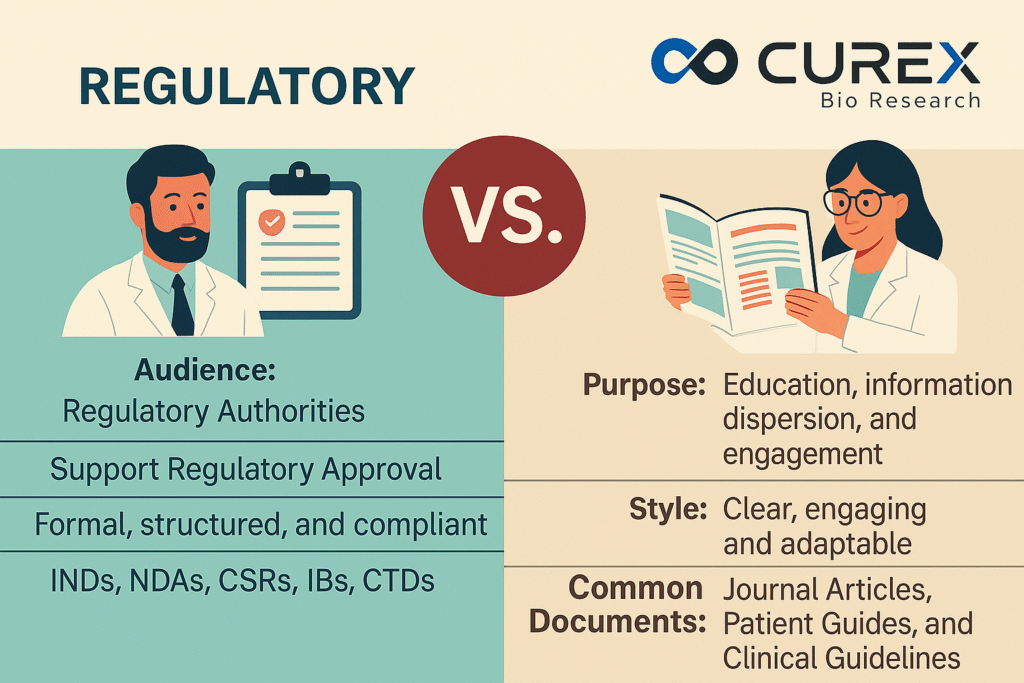
In the fast-evolving world of healthcare and pharmaceuticals, clear and compliant communication is not just a necessity—it’s a strategic advantage. Two specialized fields that often come into focus are Regulatory Medical Writing and Scientific Writing. While they may sound similar, they serve distinct purposes, audiences, and regulatory needs. At CUREXBIO, one of the leading providers of medical writing services in India, we offer expert support in Medical and Scientific Affairs to help organizations navigate these critical domains with precision and compliance. Let’s break down the key differences. What is Regulatory Medical Writing? Regulatory Medical Writing is a specialized discipline focused on creating documents that support the approval of drugs, medical devices, and other healthcare products by regulatory authorities such as the FDA or EMA. This type of writing is highly structured, precise, and governed by strict guidelines such as ICH-GCP. It requires a deep understanding of clinical trial lifecycles, regulatory standards, and the ability to present complex data clearly and accurately. Common documents include:• Clinical Study Reports (CSRs)• Investigator Brochures (IBs)• New Drug Applications (NDAs)• Common Technical Documents (CTDs)• Pharmacovigilance and safety reports Regulatory writers must ensure that every document is compliant, consistent, and tailored to the expectations of health authorities. What is Scientific Writing? Scientific Writing, on the other hand, is broader in scope and audience. It involves communicating scientific and medical information to a variety of readers—from healthcare professionals and researchers to patients and the general public. The goal is to make complex information accessible, engaging, and informative. Scientific writers often work on:• Research articles for peer-reviewed journals• Patient education materials• Clinical guidelines• White papers, blogs, and digital content• Medical marketing and training materials Unlike regulatory writing, scientific writing is more adaptable in tone and style, depending on the target audience. Major Difference at a Glance Aspect Regulatory Medical Writing Scientific Writing Audience Regulatory Authorities Healthcare Professionals, Patients, and Public Purpose Support Regulatory Approval Education, information dispersion, and engagement Style Formal, structured, and compliant Clear, engaging, and adaptable Common Documents INDs, NDAs, CSRs, IBs, CTDs Journal Articles, Patient Guides, and Clinical Guidelines Both Are Essential In today’s competitive landscape, pharmaceutical and biotech companies must excel in both areas. Regulatory writing ensures that products meet safety and efficacy standards and gain market approval. Scientific writing helps disseminate knowledge, support medical education, and build trust with stakeholders. How CUREXBIO Can Help At CUREXBIO, we provide comprehensive medical writing services in India backed by deep expertise in Medical and Scientific Affairs. Our team of seasoned writers and regulatory experts can support you with: • Regulatory Document Preparation – From protocols to submission-ready dossiers• Scientific Communication – Journals, patient materials, CME content, and more• Medical and Scientific Strategy – Ensuring your messaging is both compliant and compelling Whether you’re preparing for a regulatory submission or launching a new educational campaign, we provide the precision, clarity, and strategic insight you need. Ready to elevate your medical and scientific communications? Contact CUREXBIO today to learn how our medical writing services in India can support your goals in regulatory and scientific excellence. Get in touch with our team to discuss your needs.


