
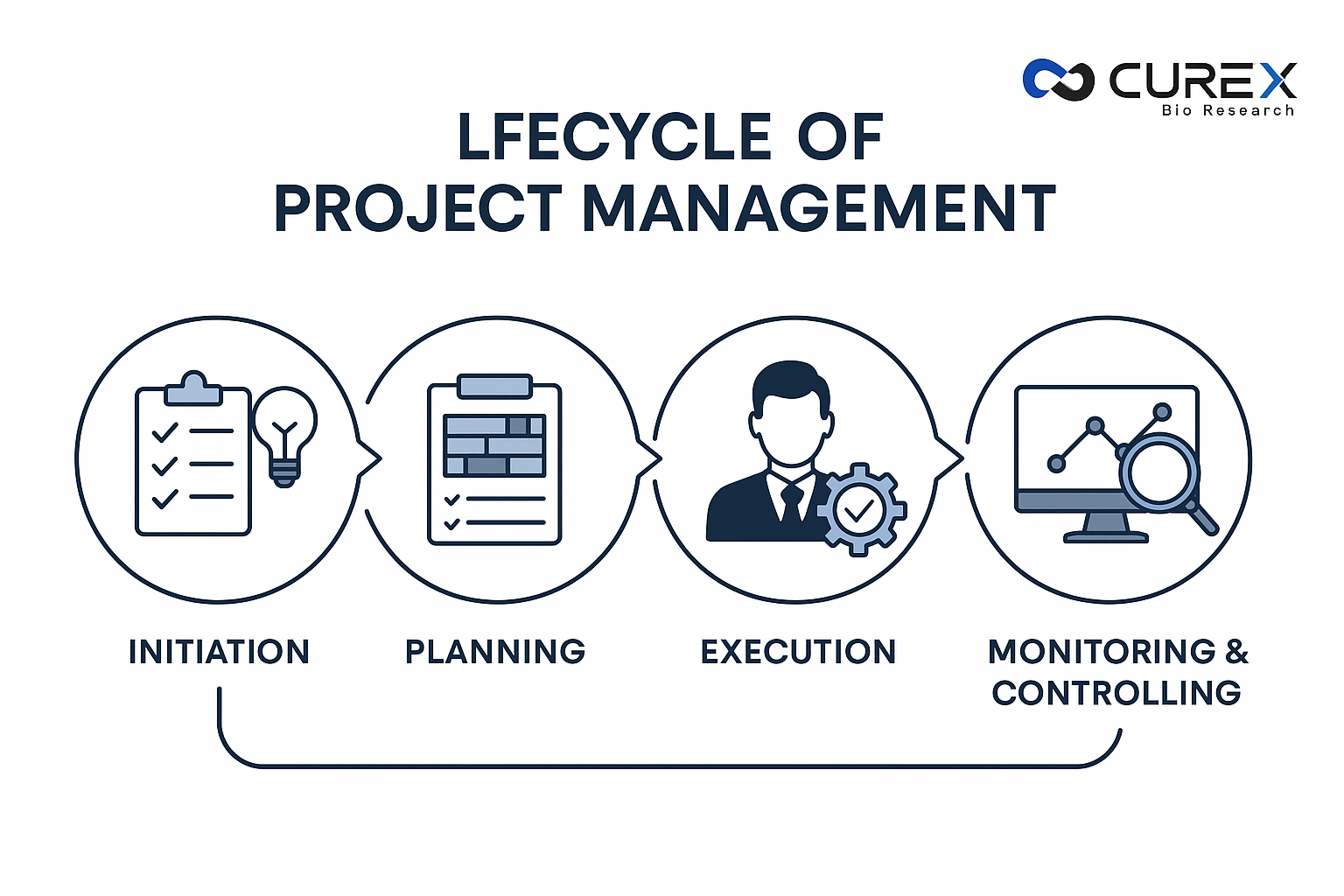
Clinical research relies heavily on effective clinical project management for the successful execution of trials. The lifecycle, outlined in the Project Management Body of Knowledge (PMBOK), comprises five phases: initiation, planning, execution, monitoring and controlling, and closing. CUREXBIO supports sponsors through this entire lifecycle using innovative tools and data-driven strategies that streamline operations and improve outcomes.
Strong Clinical Project Management ensures that each phase of a clinical trial is strategically aligned with scientific goals, regulatory expectations, and patient safety standards—allowing sponsors to execute projects efficiently and with greater predictability.
Table of Contents
ToggleInitiation
The initiation phase marks the start of a project by defining objectives, assessing feasibility, identifying stakeholders, and outlining scope. This stage includes developing a project charter, conducting a needs assessment, and forming the core team.
Example: Imagine a biotech company developing a new oncology drug. During initiation, the project manager (PM) drafts a charter specifying the trial’s goal—to evaluate the drug’s efficacy in Phase II patients with specific cancer types. CUREXBIO helps stakeholders align timelines, budgets, and compliance requirements, performing gap analyses to ensure adherence to FDA and ICH guidelines from the very beginning.
Strategic Outlook (Planning)
The planning phase involves creating detailed roadmaps for scope, schedule, budget, risks, and quality. Tools like Gantt charts and risk registers help define deliverables and assign responsibilities.
Example: The oncology trial’s plan includes site selection, patient recruitment, and data collection over 18 months. Risks like IRB approval delays are identified early, with contingency plans ready. Budgets are allocated for CRO services, investigational supplies, and monitoring visits. CUREXBIO integrates digital platforms that enhance planning efficiency and strengthen overall clinical project management.
Execution
Execution is the action-oriented phase where teams bring the plan to life through site activation, patient enrollment, data collection, and cross-functional coordination.
Example: In the oncology study, the PM oversees training, drug shipment, and patient screening while addressing challenges like low enrollment through targeted recruitment strategies. At CUREXBIO, experienced project leads ensure smooth execution and proactive issue management, keeping trials within timelines and scope.
Monitoring and Controlling
This phase runs alongside execution, focusing on tracking progress, managing risks, and maintaining quality. Key performance indicators (KPIs) are used to evaluate performance and initiate corrective actions when needed.
Example: CUREXBIO’s approach to clinical project management blends centralized and risk-based monitoring, helping detect issues early, maintain data integrity, and ensure compliance with study protocols.
Wrapping Up and Learning Lessons (Closing)
The closing phase ensures that all project activities are completed as planned, including data lock, final reporting, and documentation archiving. It also involves reviewing lessons learned for future improvements.
Example: Once the trial concludes, the PM finalizes regulatory submissions, holds close-out meetings, and ensures proper knowledge transfer. CUREXBIO supports teams during closure by managing regulatory filings and documentation, ensuring a seamless transition to post-marketing studies.
Overview of the Lifecycle
| Phase | Key Activities | Example Outcomes | Challenges |
|---|---|---|---|
| Initiation | Define scope, charter, stakeholders | Approved project charter | Misaligned expectations |
| Planning | Develop schedules, budgets, risk plans | Comprehensive management plan | Overly optimistic timelines |
| Execution | Implement activities, manage teams | Patient enrollment and data collection | Resource shortages |
| Monitoring & Controlling | Track performance, manage changes | Corrective actions and audits | Deviation from plan |
| Closing | Finalize deliverables, lessons learned | CSR submission and archiving | Incomplete documentation |
This structured lifecycle ensures projects transition smoothly from startup to close, minimizing risks and maximizing efficiency through sound clinical project management practices.
Managing the Lifecycle of Clinical Project Management with CUREXBIO
CUREXBIO provides tailored solutions for every stage of clinical project management, from feasibility to regulatory submission and beyond. With experienced, multidisciplinary global teams and advanced, proven scientific methodologies, we help sponsors execute trials efficiently, compliantly, and on schedule—empowering innovation in clinical research.


